

They got to work, and I settled into the one chair I wasn’t taking, watching them with my folder in my lap. Jason directed the other two with quiet efficiency. They wrapped the television carefully in blankets, securing it with tape. Tyler disconnected all the cables, coiling them neatly. Marcus helped lift the TV onto a dolly, and together they wheeled it out to the truck.
Next came the sofa. It took all three of them to maneuver it through the doorway, tilting it at angles, communicating in that shorthand way people develop when they work together regularly.
“On three. One, two, three.”
I watched them work, occasionally checking items off my list. Each piece of furniture that disappeared through that door felt like taking a breath after holding it too long.
The coffee table. The end tables. The lamps. The bookshelf with all of Amanda’s decorating books still on it. I’d bought the bookshelf. The books could stay.
By 9:30, the living room was empty except for the chair I sat in. The space looked bigger somehow. The walls bare where frames had hung. The floor marked with indentations where furniture legs had rested. Sunlight streamed through the windows, illuminating dust particles floating in the air, making patterns on the hardwood floor.
“Kitchen next?” Jason asked, wiping sweat from his forehead despite the cool morning.
“Yes, please. The refrigerator, microwave, and all the small appliances on the counter. Oh, and there’s a stand mixer in the pantry.”
Tyler’s eyes widened when he opened the refrigerator and saw how full it was. “Ma’am, there’s a lot of food in here.”
“I know. Just leave it on the counter. They’ll have to deal with that themselves.”
They emptied the refrigerator’s contents onto the counter—an odd assortment of leftovers, condiments, and ingredients—then disconnected it and wheeled it out, leaving a dark rectangular space where it had stood. Marcus unplugged the microwave, the espresso machine, the blender. Each appliance joined its companions in the truck.
By eleven, they’d moved to the bedrooms. My furniture. My linens. My clothes. The washer and dryer from the laundry room. Even the vacuum cleaner I’d bought last spring. The house was becoming a skeleton of itself.
I made them stop for lunch, insisting they sit and eat the sandwiches I’d prepared. They were grateful for the break, their shirts damp with sweat despite the mild temperature.
“You’re handling this really well,” Jason said between bites. “Most people get emotional when they move.”
“I’m not most people,” I said simply. “And I’m not sad to leave. Sometimes you have to know when it’s time to go.”
He nodded slowly, understanding passing between us without more words needed.
By noon, the truck was packed. The house stood empty around us, echoing with each footstep. Bare walls. Bare floors. Bare counters. Only the bones of it remained.
I walked through each room one final time—not saying goodbye, just witnessing. This had been my home for three years, but it had never really been mine.
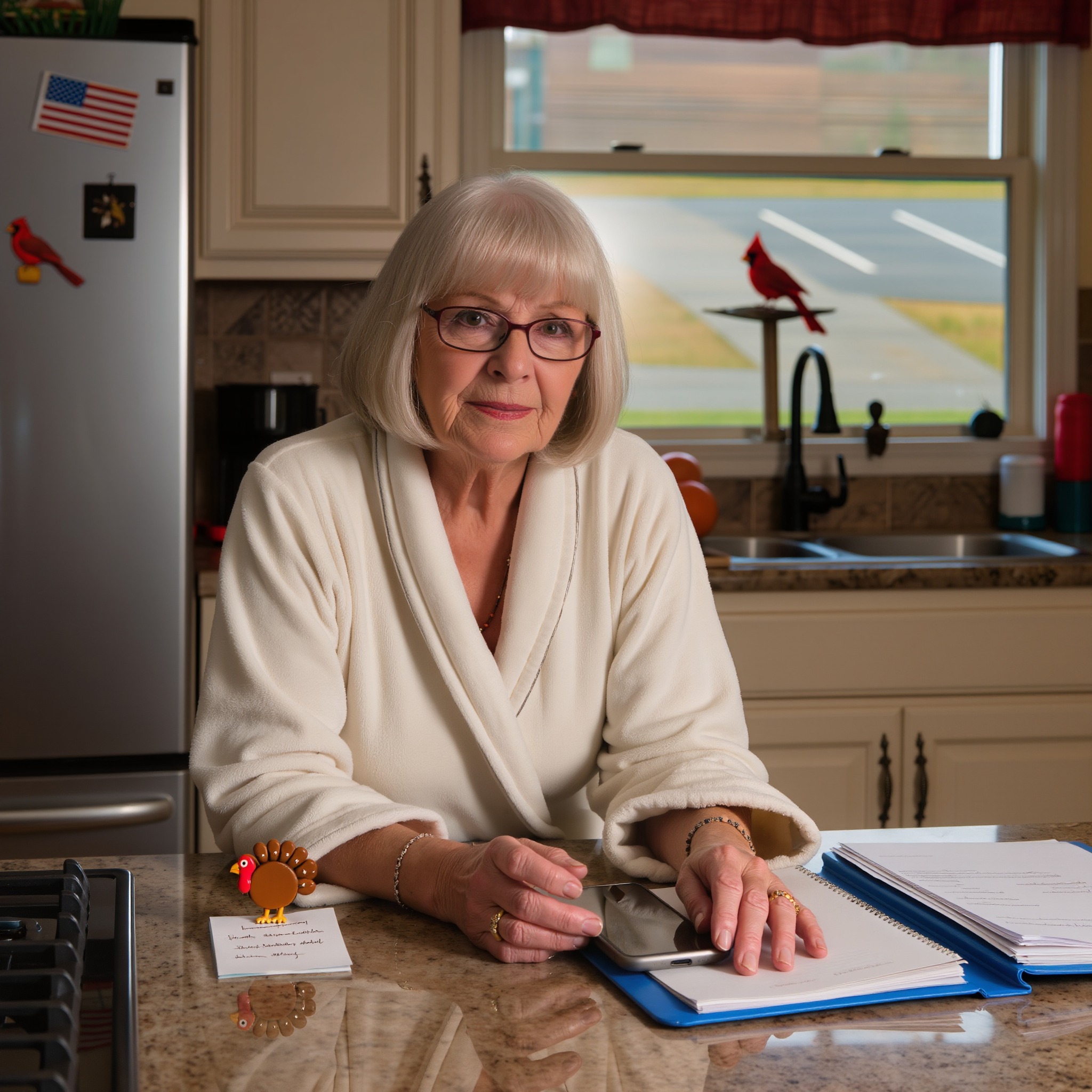
In the kitchen, I stopped at the counter. Amanda’s note still sat there, held down by the turkey magnet. I left it exactly where it was. Next to it, I placed the stack of mail that had arrived that morning—the electric service, water service, internet—now in Michael’s name, since I’d called earlier in the week and had the accounts transferred. They’d figure it out eventually.
Then I did something that made me smile.