

“But between you and me, sometimes I just want my house back. You know what I mean? Like, it’s nice having the help, but I miss having our own space.”
Our own space.
As if I was intruding. As if this wasn’t the house I’d helped buy.
I didn’t confront her. I didn’t mention what I’d heard. I just filed it away in some quiet corner of my mind and kept going, because what else could I do? Where else would I go?
I convinced myself I’d misunderstood. That Amanda was just having a bad day. That she didn’t really mean it the way it sounded.
But after that, I started noticing other things: the way they’d make plans without asking if I wanted to join; the way Amanda would reorganize the kitchen after I’d cooked, moving things to where she preferred them; the way Michael would talk about his house and his mortgage, even though my name was on half the paperwork, and I’d paid far more than half the costs.
I was living in their space, cooking in their kitchen, helping raise their children—but I was doing it with my money, on my time, with my energy.
And there I was, sitting at that kitchen table on Thanksgiving morning, holding my coffee and staring at that note, while all of those memories arranged themselves into a pattern I couldn’t ignore anymore.
I hadn’t been invited to live with them because they loved me.
I’d been invited because I was useful.
And the moment I wasn’t useful—the moment I might be inconvenient—they’d left me behind without a second thought.
I finished my coffee and stood up slowly. For three years, I’d convinced myself this was my home.
But it wasn’t.
It was their house—one I’d been paying for while pretending I belonged.
As I rinsed my cup in the sink and placed it carefully in the dish rack, I realized something that should have scared me but didn’t.
I was done pretending.
I picked up that note again. My fingers traced over Amanda’s handwriting, smooth and confident. She’d probably written it quickly, maybe while packing her suitcase, squeezing it in between choosing swimsuits and booking excursions.
You wouldn’t have liked the flight.
That sentence bothered me more than the rest—not because it was cruel, but because it was so casual, so certain, as if she knew me well enough to decide what I would or wouldn’t enjoy without ever asking.
Had I ever said I didn’t like flying? I couldn’t remember.
Harold and I had flown to visit his sister in Arizona years ago. It was fine. A little cramped, maybe, but nothing I couldn’t handle.
But that wasn’t really the point, was it?
The point was that they’d made a choice. A family vacation. Hawaii, Thanksgiving week. And somewhere in all that planning, all those excited conversations about beaches and resorts and luaus, they decided I didn’t fit.
I folded the note and set it down. My hands felt steady. My mind felt clear.
I walked through the living room slowly, my slippers shuffling against the hardwood floor I’d paid to have refinished last year. The morning light was stronger now, pouring through the windows and illuminating everything with that particular brightness that makes dust particles visible in the air.
I stopped in front of the 65-inch television mounted on the wall. Michael had wanted it for the Super Bowl two years ago. Amanda had thought it was too big, too extravagant. But when I offered to buy it as a Christmas gift, suddenly it was perfect.
I ran my hand along the back of the sofa—cream-colored, modern, the kind with clean lines and firm cushions that look beautiful but aren’t particularly comfortable. Amanda had seen it in a catalog and fallen in love.
Three thousand dollars.
I’d paid for it without blinking.
The coffee table, the end tables, the lamps, the bookshelf—mine.
I moved into the kitchen, opening cabinets one by one: the dishes, the glasses, the set of copper pots Amanda had admired at a kitchen store. I’d bought those for her birthday, watching her face light up as she opened the box.
The refrigerator hummed beside me. Stainless steel, French doors, ice maker built into the door. Their old one had worked just fine, but Amanda wanted something that matched her vision for the kitchen.
I’d made that vision possible.
The washer and dryer in the laundry room. The patio furniture on the back deck. The lawn mower in the garage. The router that kept their internet running. Even the fancy blender that sat on the counter—the one Amanda used every morning for her smoothies.
I’d paid for all of it.
Not because they’d asked, really. They’d mentioned needs, expressed wishes, made comments about how nice it would be to have this or that. And I’d stepped in, opened my wallet, solved the problem.
Because that’s what I thought love looked like.
I walked back to my bedroom and sat on the edge of my bed. On my nightstand was a photograph of Harold taken maybe ten years before he died. He was smiling at something outside the frame. His eyes crinkled at the corners the way they always did when he laughed.
“What would you think about all this?” I asked his picture softly.
Harold had always been practical—generous, but clear-eyed. He would have seen what was happening long before I did. He probably would have pulled me aside months ago and asked me gently why I was working so hard to buy affection.
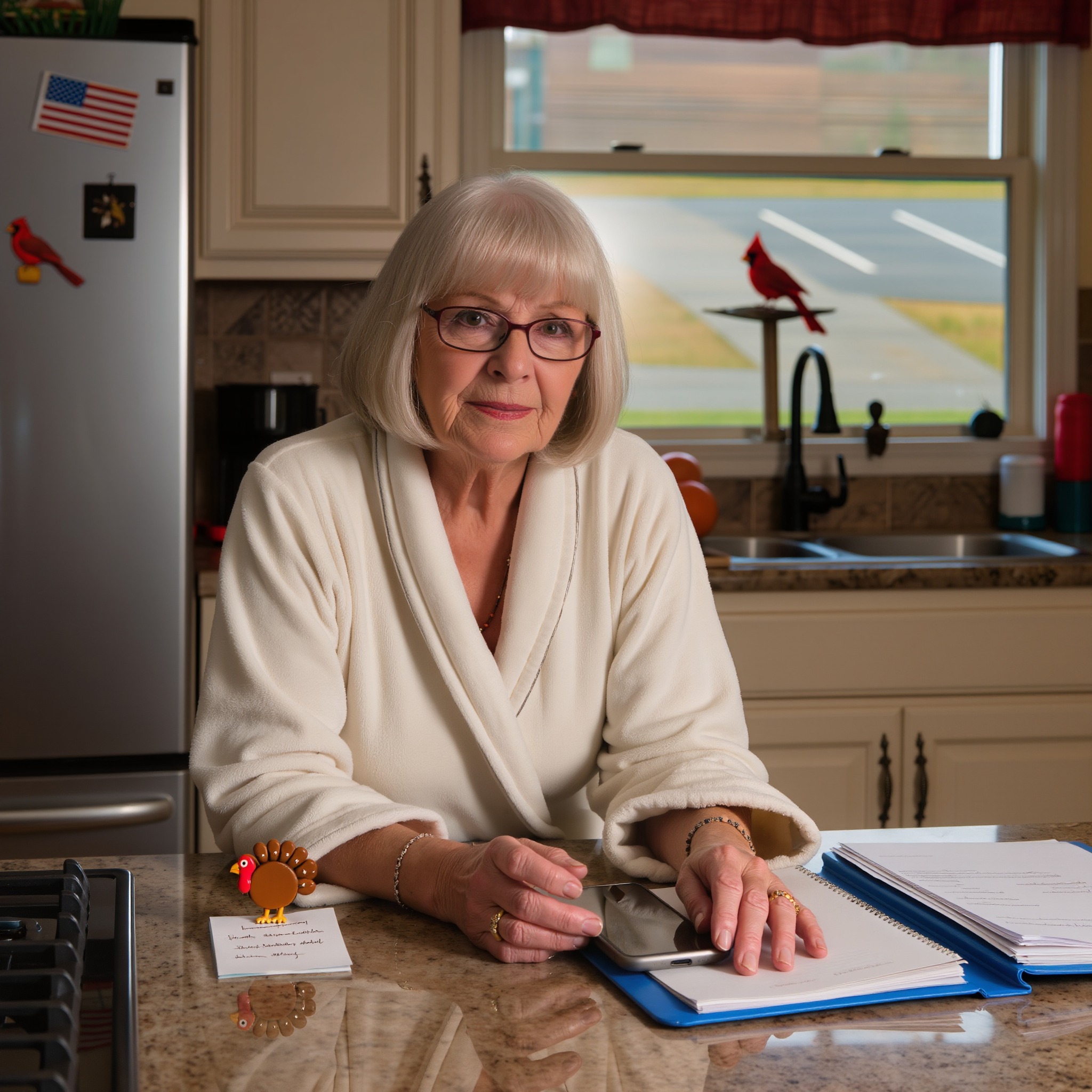
I touched the frame, then opened the drawer of my nightstand. Inside was a blue folder, the kind with pockets and a little elastic band to keep it closed. I’d always been organized, the type of person who kept receipts and warranty cards and instruction manuals filed away neatly. Harold used to tease me about it.
“You keep track of everything,” he’d say, shaking his head with amusement.
I pulled out the folder and opened it.