

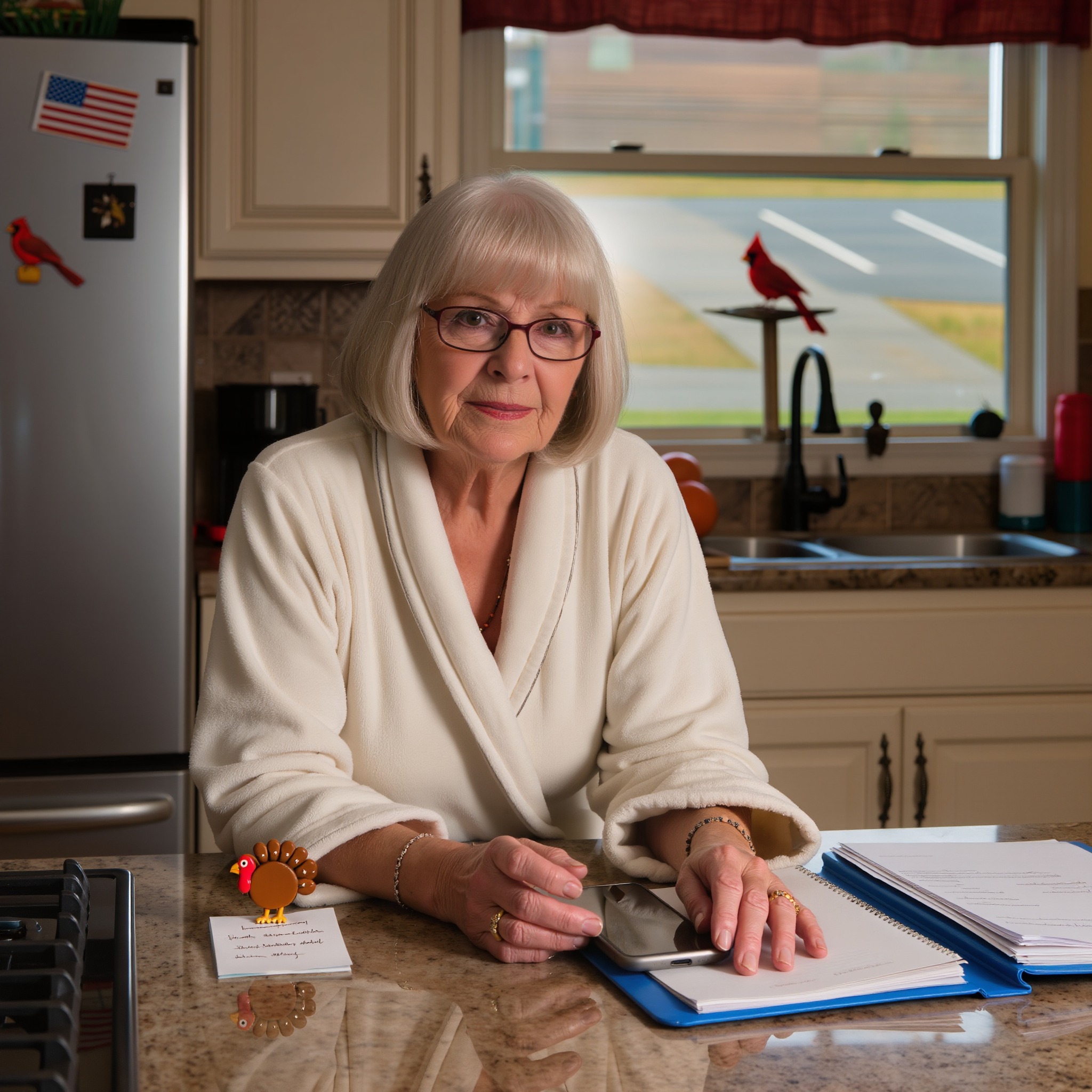
After dinner, we moved to the living room with coffee and pie. Ruth had brought a deck of cards, and we played a few rounds of rummy while the afternoon light slanted golden through my windows.
Around 4:00, they started gathering their things to leave.
“This was lovely,” Louise said, hugging me at the door. “Thank you for hosting.”
“We should do this again,” Bernard added. “Maybe Christmas.”
“I’d like that very much.”
After they left, I cleaned up slowly—putting away dishes, storing leftovers, wiping down counters. The apartment felt warm and lived in, filled with the remnants of good conversation and better company.
I made myself a cup of tea and carried it to the balcony. The air was cool but not cold, comfortable with my cardigan wrapped around me. The sun was beginning to set, painting the sky in shades of orange and gold. In the courtyard below, someone had turned on the fountain, and I could hear water trickling softly.
I thought about last Thanksgiving—about waking to that empty house, about finding that note, about the shock and hurt that had cut so deep I’d felt it in my bones.
And then I thought about what came after: the quiet decision, the careful planning, the moment I’d taken my life back with both hands and refused to let go.
Was I sad about losing Michael?
Yes. Sometimes. He was still my son, and that bond didn’t just disappear because we were no longer speaking.
But was I sad about how things turned out?
No.
Because here, in this small apartment with my own furniture and my own choices and my own peace, I’d found something I’d been missing for years.
Myself.
The woman I’d been before I started shrinking to fit other people’s expectations. The woman Harold had fallen in love with—who knew her own mind and wasn’t afraid to stand in her truth. She’d been buried under years of trying to be needed, trying to be useful, trying to buy love with money and time and endless sacrifice.
But she hadn’t disappeared.
She’d just been waiting.
My phone, sitting on the table inside, stayed silent. No calls. No texts. No demands or expectations or emergencies that only I could solve.
Just silence.
And in that silence, I heard something I’d been missing: my own voice telling me I was enough. Telling me I deserved peace. Telling me that walking away from people who didn’t value me wasn’t cruel.
It was necessary.
The sky deepened to purple and stars began appearing one by one. I finished my tea and went back inside, closing the balcony door softly behind me.
I looked at that fifth plate I’d set out earlier, now washed and waiting to be put away. I thought about removing it, putting it back in the cabinet where it belonged. But I’d left it there for most of the day—not because I expected Michael to show up, not because I was holding on to false hope, but because I’d learned that forgiveness doesn’t mean forgetting. It doesn’t mean letting people hurt you again.