
Because I’d learned something important in these months: you can’t make people value you. You can only decide to value yourself.
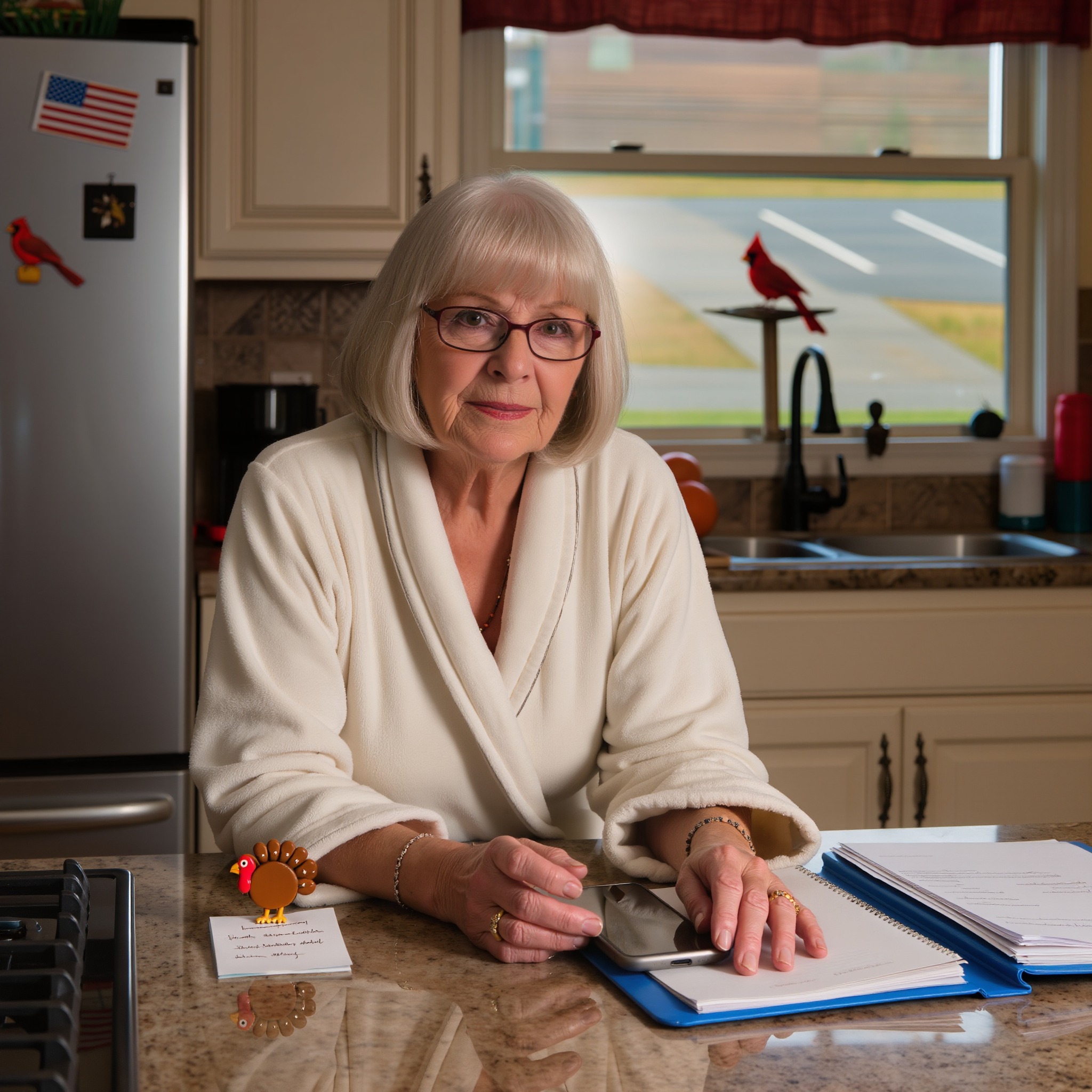
And now, on another Thanksgiving morning, I woke at 5:30 to sunlight streaming through my curtains and the smell of coffee brewing on a timer I’d set the night before.
This year felt different—not heavy with expectation or performance. Just open. Ready.
I’d invited Ruth and two other neighbors, Bernard and Louise, for dinner. Nothing fancy—just the four of us sharing a meal. Bernard was bringing rolls from his favorite bakery. Louise promised her famous cranberry sauce. I was handling the turkey, which was smaller than any I’d ever made, but perfect for our little group.
I moved through the morning preparations with ease. The turkey went into the oven. Potatoes bubbled on the stove. I set my small table with the good china—the pieces that had belonged to my mother and then to me, never to anyone else.
Four plates. Four napkins. Four glasses.
Then, on impulse, I pulled out one more plate and set it at the head of the table. Empty, just in case. Not for Michael, not really, but for the possibility that someday, somehow, there might be reconciliation—or maybe just for hope itself, which deserved a seat at the table.
Ruth arrived first, carrying a pumpkin pie that smelled like heaven.
“Happy Thanksgiving,” she said, hugging me at the door. “Your place smells wonderful.”
“Thank you for coming. I’m so glad you’re here.”
Bernard and Louise came together, laughing about something that had happened in the elevator. Bernard’s rolls were still warm in their bag. Louise’s cranberry sauce gleamed ruby red in a crystal bowl.
We settled into easy conversation while I finished cooking—everyone pitching in to help. Bernard mashed the potatoes. Ruth set out the drinks. Louise arranged the food on serving platters.
By noon, we were seated around the table, everything laid out beautifully.
“Should we say grace?” Louise asked.
I nodded.
We joined hands, the four of us making a small circle, and Louise spoke a simple blessing—thankful for food, for friendship, for another year of life. When she finished, we squeezed hands once before letting go.
The meal was perfect, not because the food was fancy or the portions were huge, but because it was real. We ate and talked and laughed. Bernard told stories about his years as a schoolteacher. Ruth shared updates about her daughter in California. Louise asked about my painting classes.
No one asked me to get up and fetch things. No one expected me to serve them first. We passed dishes around, helped ourselves, complimented each other’s contributions.
It was partnership. Friendship. Equality.
Exactly what family should be.