

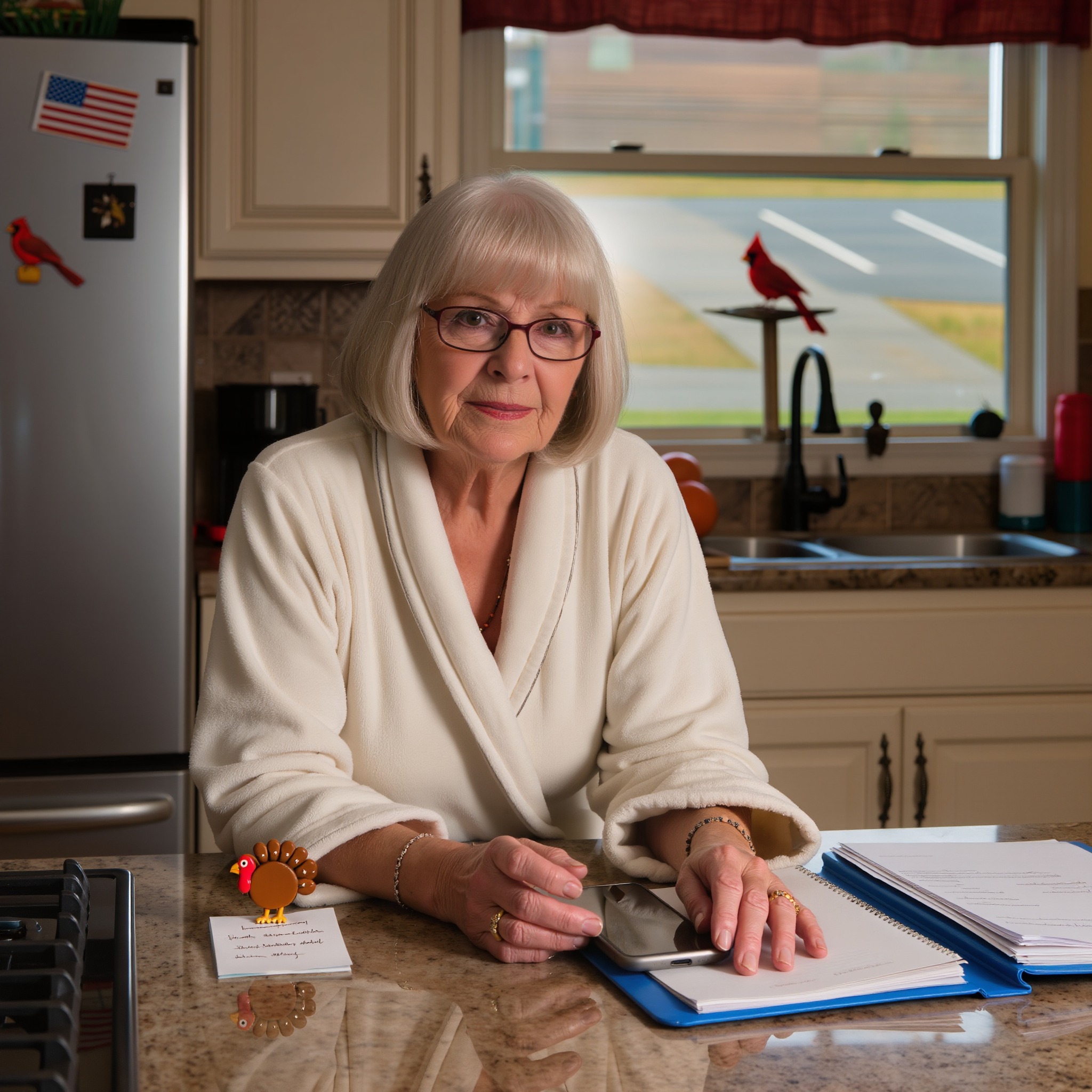
Amanda’s face was red, her voice sharp. “Officers, did you talk to her? Did she tell you what she did?”
Michael was right behind her, his expression dark. “She stole from us. She emptied our entire house.”
The older officer held up his hand calmly. “Mr. Wright, Mrs. Wright, we’ve reviewed the situation. Your mother has receipts proving she purchased everything that was removed from your home. She broke no laws.”
Amanda’s mouth fell open. “But that’s our furniture. Our appliances.”
“Actually, ma’am,” the older officer said evenly, “legally, they belong to whoever purchased them. Your mother purchased them. They’re hers.”
Michael shook his head violently. “That can’t be right. This is our house. She can’t just take everything.”
“Sir,” the officer said, “ownership of property is determined by who paid for it. Your mother has extensive documentation. There’s nothing criminal here.”
I stood in my doorway watching this exchange with quiet composure. Amanda’s eyes found mine, filled with fury and disbelief. Michael looked like he wanted to say something but couldn’t find the words.
The younger officer spoke up. “Folks, I suggest you try to work this out as a family. But from a legal standpoint, the case is closed.”
The officers moved toward the elevator, leaving Michael and Amanda standing in the hallway, staring at me.
For a long moment, nobody spoke.
Then I stepped back into my apartment.
“I hope you enjoyed Hawaii,” I said softly, and I closed the door.
The letter arrived three weeks later, delivered by tracked mail. I signed for it at the door, thanking the postal worker, and carried it inside. The envelope was official-looking, with the county courthouse address in the corner.
I set it on my kitchen table and made myself tea before opening it.
Inside was a notice to appear in small claims court. Michael and Amanda were suing me for emotional damages, claiming my actions had caused them undue stress and financial hardship. The amount they were seeking was twelve thousand dollars.
I read the document twice, then set it down beside my teacup.
Ruth knocked on my door an hour later, catching me as I was watering the plants I’d placed on my balcony.
“You look troubled,” she said when I let her in. “Everything all right?”
I showed her the letter. She read it, her eyebrows rising higher with each line.
“They’re suing you. After everything.”
“Apparently.”
“Do you have a lawyer?”
“I don’t think I’ll need one.” I poured her a cup of tea. “I have my receipts, and the truth is fairly simple. Besides, I’ve learned that sometimes the best defense is just showing up prepared.”
“You’re braver than I would be.”
I smiled. “Not brave. Just tired of being afraid.”
The court date was set for early December, a gray Tuesday morning when the sky threatened snow but hadn’t quite delivered. I woke early as always and took my time getting ready. I chose my nicest coat, the charcoal one with pearl buttons that Harold had always said made me look distinguished. A simple dress underneath, comfortable shoes, my small purse with the blue folder tucked safely inside.
When I looked in the mirror, I saw a woman who was calm—ready—not angry, not anxious. Just certain.
The courthouse was downtown, a brick building with tall windows and stone steps leading up to heavy wooden doors. I arrived fifteen minutes early, checking in at the clerk’s desk and finding my way to the correct courtroom. The hallway outside was busy with people waiting for their cases. Lawyers in dark suits shuffled papers. Nervous-looking individuals sat on benches, whispering to companions. The whole place smelled like floor polish and old wood.
I found a bench near the door and sat down, folding my hands over my purse.
Ten minutes later, Michael and Amanda arrived.
Amanda wore a navy blue suit, her hair pulled back severely, makeup applied carefully. She looked like she’d dressed to impress, to appear professional and wronged. Michael wore slacks and a button-down shirt, his tie slightly crooked. His face was already flushed, whether from the cold outside or from anger, I couldn’t tell.
They saw me immediately. Amanda’s jaw tightened. Michael looked away, focusing on the floor numbers above the elevator instead. They sat on the opposite side of the hallway, not speaking to me, barely speaking to each other. The tension between us was thick enough to feel, but I remained still, unbothered, my hands resting peacefully on my lap.
When our case was called, we filed into the courtroom together—but separately—like strangers who happened to be walking in the same direction.
The room was smaller than I’d expected. Fluorescent lights hummed overhead. The judge’s bench sat elevated at the front, the seal of the county mounted on the wall behind it. There were a few rows of seats for observers, mostly empty except for a couple of people waiting for cases after hours.