
The Line of Credit: A Family Liquidation
My name is Rachel Monroe, and for the first thirty-two years of my life, I believed that love was a transaction. You gave compliance, you received affection. You gave success, you received validation. But in the ledger of the Monroe family, I was always the liability, and my parents were the sole shareholders.
I sat in my corner office on the forty-second floor of a steel-and-glass tower in downtown Chicago, the gray expanse of Lake Michigan churning below. As a senior financial analyst for Sterling & Krow, my life was governed by risk assessment. I could spot a failing derivative from three spreadsheets away. I could predict a market correction by the pitch of a CEO’s voice.
Yet, I hadn’t predicted that the biggest volatility in my portfolio would be my own mother.
I was careful with money. Obsessive, even. I wore tailored suits that I bought second-hand and had altered. I packed my lunch in Tupperware containers that I washed and reused until they warped. I did this because I knew a secret that most people learn too late: Security is not a given; it is a fortress you build brick by brick.
When I was twenty-three, fresh out of grad school and terrified of the world, my father, Thomas Monroe, had sat me down. He looked at me with those soft, watery eyes that I always mistook for kindness.
“Rachel,” he had said, his hand over mine. “The world is dangerous. You’re in a big city alone. You need a safety net. Add us as authorized users to your emergency gold card. We won’t touch it. It’s just… for peace of mind. In case something happens to you, we can handle your affairs.”
It sounded logical. It sounded paternal. I trusted him. That was the first entry in the error log.
For nine years, that card sat dormant. A zero balance. A phantom limb of trust.
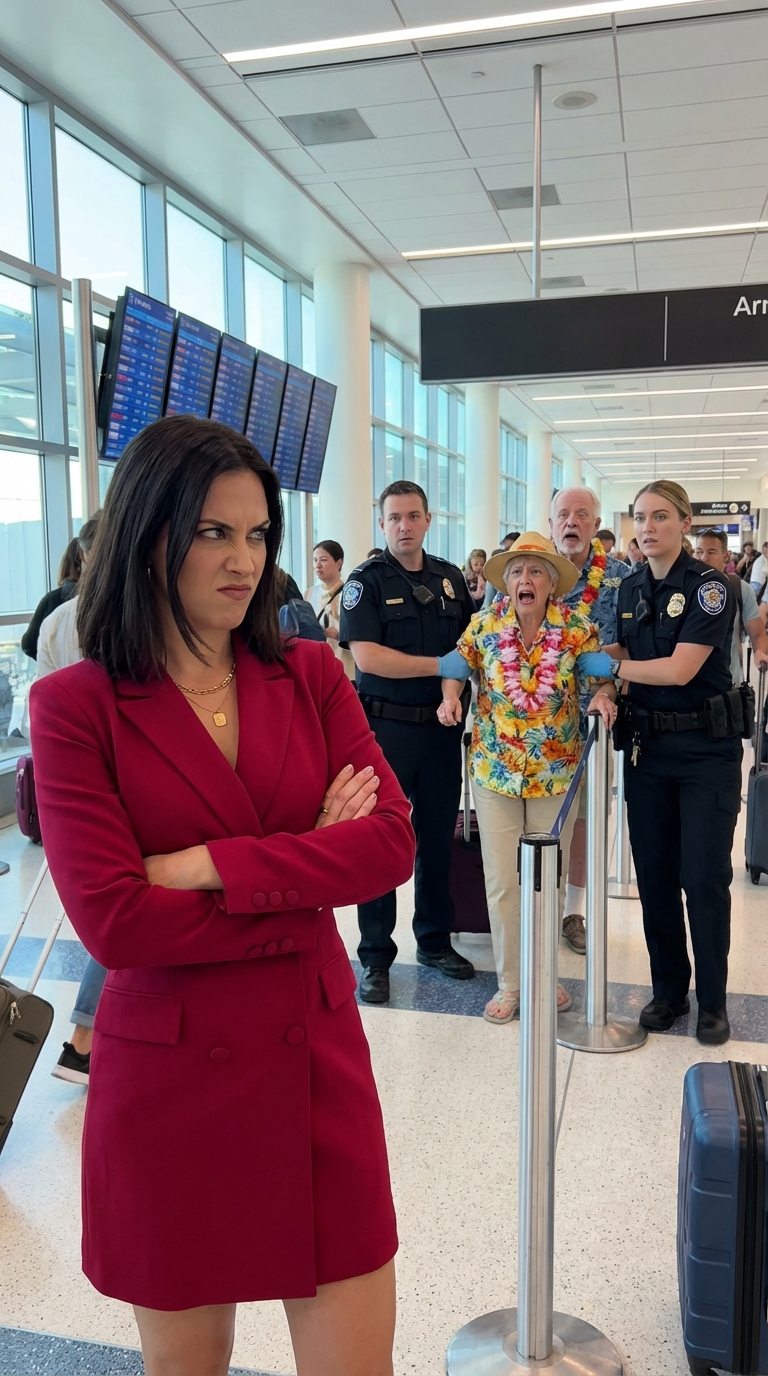
Then came the summer of my thirty-second year. My younger sister, Olivia, was twenty-six and functionally a teenager. She drifted between “aspirational careers”—lifestyle blogging, dog yoga instruction, artisanal candle making—always funded by the Bank of Mom and Dad. When she announced she was going to Hawaii for two weeks with her entourage to “reset her chakras,” I rolled my eyes but didn’t intervene. I assumed my parents were bleeding their retirement dry to fund her delusions, as they always did.
I didn’t know the funding had changed sources.
It was a Tuesday afternoon. The air conditioning in my office was humming, a low-frequency drone that usually helped me focus. My phone vibrated against the mahogany desk.
Mom.
I hesitated. Calls from Karen Monroe were rarely good news. They were usually guilt trips or requests for tech support. But I answered.
“Rachel?”
She was laughing. It wasn’t a nervous laugh, or a warm laugh. It was the wet, breathless sound of someone who has just gotten away with something illicit.
“Hello, mother.”
“I just wanted to tell you,” she said, her voice giddy, slurred slightly by what I assumed was a midday mimosa. “We did it. We emptied it.”
I frowned, staring at a spreadsheet of municipal bond yields. “Emptied what?”
“The gold card, silly. Your card.” She giggled. “Ninety-five thousand dollars. First-class flights for Olivia and her friends. The penthouse suite at the Royal Hawaiian. Diamond earrings for me. A new watch for your father. We maxed it out, Rachel.”