
Durante una década, me forjé una vida con determinación. Pasé de obrero a carpintero, luego a capataz. Obtuve mis certificaciones por las noches, estudiando manuales de ingeniería estructural mientras me ardían los ojos de cansancio. A los veintiocho años, era una fuerza de la naturaleza. Tenía mi propio equipo, una camioneta decente y una cuenta bancaria que había llenado con mi propio esfuerzo. Era feliz. Era libre.
Y entonces, el universo decidió poner a prueba la integridad estructural de mi alma.
Empezó con dificultad para respirar. Lo atribuí a alergias o al polvo de la obra. Era fuerte; ignoraba el dolor para ganarme la vida. Pero luego llegó la fatiga, un agotamiento profundo que ni el sueño podía aliviar. La llamada de atención llegó un martes. Estaba inspeccionando un andamio en el cuarto piso de un nuevo complejo de oficinas cuando el mundo se tambaleó. Me fallaron las rodillas. No podía respirar. Sentí como si alguien me hubiera vertido hormigón en la cavidad torácica y lo hubiera dejado secar.
Mark , mi mentor y el especialista en hormigón más brusco que he conocido, me atrapó antes de que me cayera por la barandilla. Me llevó a urgencias en su Ford destartalado, saltándose dos semáforos en rojo.
El diagnóstico fue un mazazo.
A tumor. Rare, aggressive, and pressing against my bronchial tubes. It wasn’t just “bad luck”; it was a ticking time bomb. The oncologist, a woman with kind eyes and a grim expression, laid it out. I needed complex thoracic surgery to remove the mass, followed by aggressive radiation.
Then came the second blow: the cost.
As an independent contractor, my insurance was catastrophic-coverage only. It covered emergencies, not “elective” specialists. The hospital wanted a deposit that looked like a telephone number. The surgery, the rehab, the time off work—it was going to cost over a hundred and fifty thousand dollars.
I drained my savings. I sold my truck. I sold my tools. My crew rallied—Mark started a collection, the electricians threw in cash—but we were tens of thousands short. And the clock was ticking. Every day I waited, the tumor grew.
I had no choice. I had to go to the bank of Mom and Dad.
I knew they had the money. My father had just retired with a golden parachute, and my mother had inherited a significant sum from her aunt. I drove to their pristine suburban fortress in a borrowed sedan, wearing clothes that hung off my frame because I’d lost twenty pounds in six weeks.
The house smelled of potpourri and denial. I sat in the living room, clutching my medical binder like a shield. My mother was arranging lilies in a crystal vase. My father was scrolling on his iPad.
I told them everything. The tumor. The terror. The money.
“I need help,” I said, my voice cracking—something I hated. “I’m drowning. If I don’t get this surgery within the month, the doctor says it might be inoperable.”
Silence stretched in the room, heavy and suffocating. My mother placed a lily into the vase with surgical precision. My father finally looked up, taking off his reading glasses.
“Morgan,” he began, his tone reasonable, like he was explaining why we couldn’t get a puppy. “This is… terrible news. Really.”
“But,” my mother interjected, turning to face me, “our liquid assets are currently tied up.”
“Tied up?” I asked, confused. “Dad, you just bought a boat.”
“We sold the boat,” he corrected. “To pay for the venue.”
“The venue?”
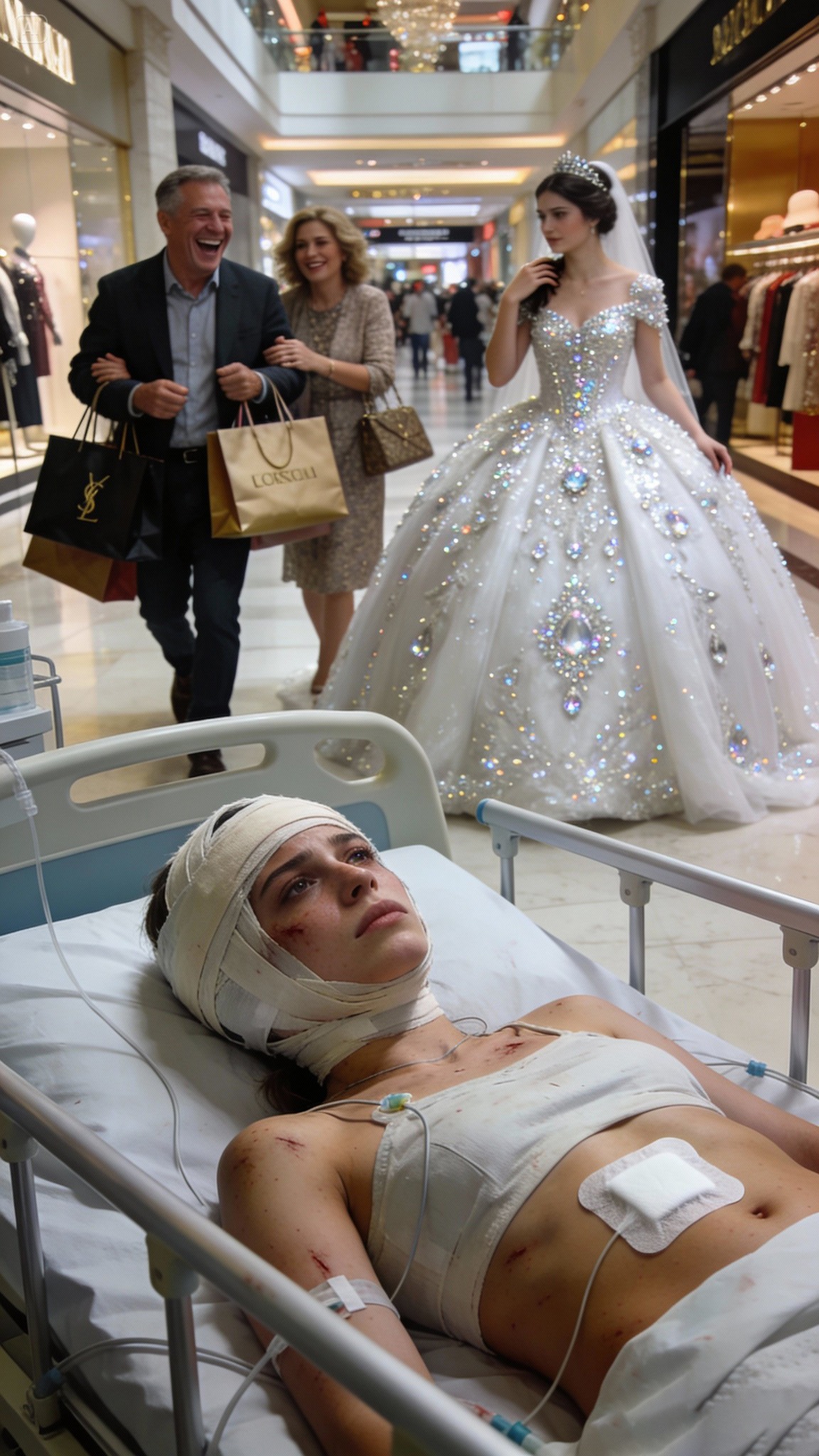
“Emma’s wedding,” my mother said, her eyes lighting up. “It’s in three weeks. The Grand Hotel Ballroom. The flowers, the catering, the custom gown from Milan… Morgan, the deposits alone were a fortune. We can’t pull that money out now. It’s all non-refundable.”
I stared at them. The room seemed to spin. “You’re paying for a party,” I whispered. “I’m talking about my life.”
“It’s not just a party!” my mother snapped, offended. “This is your sister’s special day. She’s been planning this since she was five. We cannot ruin it with… with this financial drama.”
“I could die,” I said. I stood up, my legs shaking. “Mom, look at me. I’m sick.”
—Siempre has sido dramático —dijo con desdén—. Y siempre has sido ingenioso. Eres... ¿qué es? ¿Un jefe de construcción? Seguro que puedes llegar a un acuerdo. Planes de pago. Préstamos.
Mi padre asintió y se refugió tras su iPad. «No podemos decepcionar a Emma, Morgan. Ahora no. Lo entiendes».
Miré la pared de fotos de Emma. Sonriente. Perfecta. Me encantó.
"Entiendo", dije. Y así fue. Por fin comprendí que era huérfana y que mis padres estaban vivos.
—No montes un escándalo en la boda —me gritó mi madre mientras me dirigía a la puerta—. Ponte algo que te cubra esos moretones en los brazos.
Salí al aire fresco de la noche, me dejé caer en el asiento del conductor del coche prestado y grité hasta que mi garganta sintió sabor a sangre.