
Not politely silent. Uncomfortably silent.
Someone shifted in their chair. Another cleared his throat.
The billionaire laughed again, but this time the sound was thinner. “You’re a sharp one,” he said. “But it doesn’t change the rules.”
The boy nodded. “I understand.”
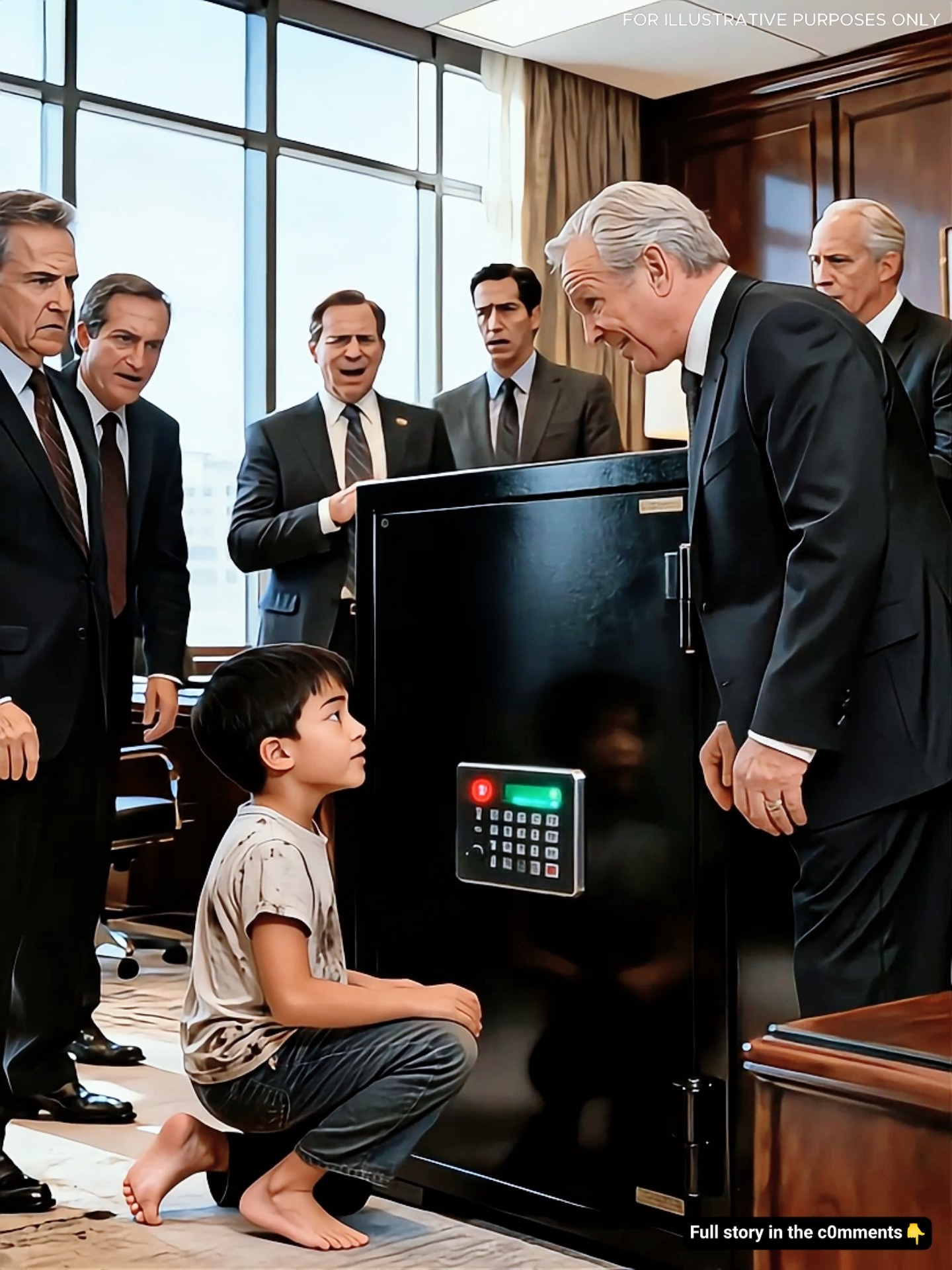
He walked closer to the safe but didn’t touch it. Instead, he turned back toward the men at the table.
“My dad used to say,” the boy began, “that real security isn’t about locks or steel. It’s about who controls the story.”
The billionaire crossed his arms. “And what does that have to do with this?”
“It means this was never a fair challenge,” the boy replied calmly. “Because if someone did open it, you could always say it didn’t count.”
No one smiled this time.
The billionaire opened his mouth, then closed it.
The boy continued, his voice steady. “And it also means that safes don’t protect what’s inside them. They protect what people don’t want others to see.”
Rosa felt her heart race. She had never heard her son speak like this before.
“That’s enough,” the billionaire said sharply. “This isn’t a lecture.”
The boy nodded respectfully. “You’re right. So here’s my answer.”
He looked directly at the billionaire. “I don’t need to open your safe.”
The billionaire smirked. “Why not?”
“Because the most valuable thing in this room isn’t inside it,” the boy said.
A pause.
“And what would that be?” the billionaire asked.
“The truth,” the boy replied. “And you already showed it.”
The silence stretched longer this time.
One man stared at the table. Another looked toward the window.
The billionaire forced a laugh. “Very clever.”
The boy shook his head. “My dad worked in security,” he said. “Not buildings. People. He said you can always tell where someone’s weakness is by watching how they treat those who can’t push back.”
Rosa felt tears well in her eyes.